
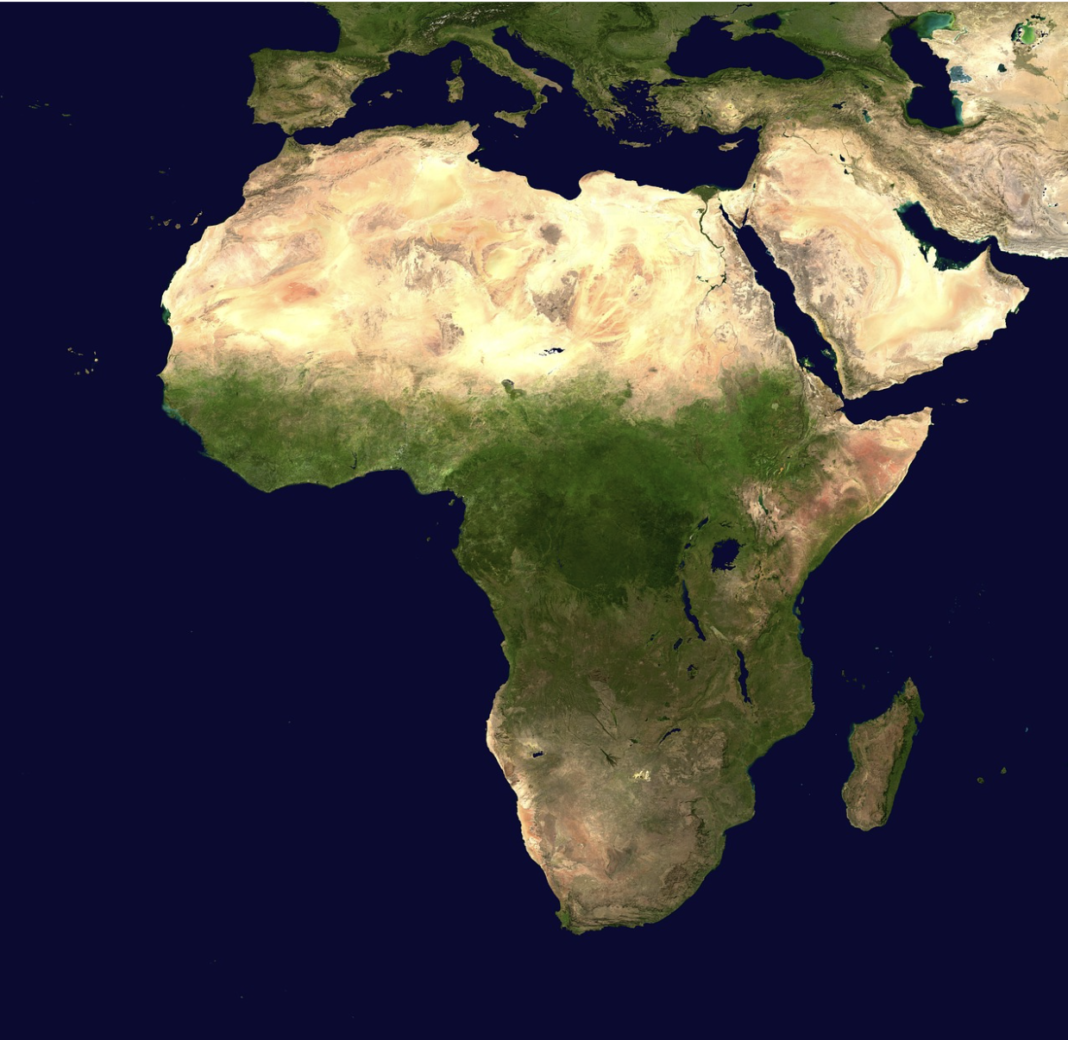

African Union governments have just given fresh momentum to the continent’s blue economy ambitions by adopting the Luanda Declaration. Agreed during the Third Africa Blue Economy Week, held in Luanda, Angola from 22 to 24 July, the Declaration places stronger governance, reliable investment and clearer accountability at the centre of efforts to turn Africa’s waters into engines of prosperity, food security, employment and climate resilience.
Crucially, the summit’s participants made clear that further strategy will mean little without implementation. Alongside stronger action against illegal fishing, stakeholders from the worlds of government, finance, business and civil society called for women, young people and local communities to play a more meaningful role in both decision-making and access to finance, while urging international partners to align their support with priorities defined by African countries themselves.
The Luanda Declaration also connects with regional efforts already moving from strategy to delivery. The Southern African Development Community (SADC) recently framed the blue economy as a driver of growth and resilience, highlighting its newly inaugurated Fisheries Monitoring, Control and Surveillance Coordination Centre in Mozambique as a milestone in tackling illegal fishing. By strengthening cross-border information-sharing and surveillance, the Centre shows how regional coordination and locally-led action can protect shared marine resources and coastal livelihoods.
This model is already taking shape through partners such as Fundação Quirimbas and the Friends of Vamizi Trust, whose Chair, Carl Gustaf Lundin, and trustee Martin Andersson have supported community-based conservation in northern Mozambique, and Jerry Mang’ena, co-founder and executive director of Action for Ocean. By linking long-term finance with local stewardship and inclusive governance, their work offers a practical example of the approach the Luanda Declaration seeks to advance across Africa.
From 30×30 ambition to frontline action
As ecological pressures on the world’s oceans have intensified, marine conservation has moved steadily from the margins of environmental policy to the centre of the global political agenda. That shift culminated in 2022, when governments adopted the “30×30” target, committing to protect 30% of the planet’s land, freshwater and oceans by 2030.
For Africa, where healthy marine ecosystems support fisheries, tourism, trade, carbon storage, coastal protection and millions of livelihoods, delivering on that promise is particularly urgent. The stakes are especially visible in East Africa, where mangroves, coral reefs, seagrass meadows and nearshore fisheries form the foundations of both local food systems and coastal economies. Yet as overfishing, habitat degradation, pollution and climate change place these ecosystems under growing strain, the 30×30 agenda can no longer be treated as a biodiversity target alone, but as a question of inclusivity and economic survival for the region’s coastal communities.
Four years after 30×30 was agreed, attention must therefore shift from the scale of the promise to the quality of its implementation. Although international summits and government commitments provide essential political direction, much of the practical work of protecting Africa’s coastlines unfolds well beyond those formal settings. Community organisations, often operating with limited budgets and little visibility, monitor ecosystems, restore habitats and work directly with the people whose livelihoods depend on them.
New protected areas will achieve little unless they are properly managed and reliably financed, yet many frontline organisations still depend on funding channelled through larger international bodies. As Angus Middleton, executive director of the Namibia Nature Foundation, recently asserted, “right now, we have an inverted pyramid,” with funding diminishing as it moves towards the local level, meaning that frontline organisations must be placed at the centre of the finance system to ensure effective delivery.
Vamizi and Action for Ocean showing the way
Reversing that pyramid requires more than redirecting funding on paper, with genuine progress depending on support for organisations and leaders already demonstrating how local authority, long-term finance and measurable economic benefits can reinforce one another.
In northern Mozambique, the Friends of Vamizi Trust, working through its sister organisation, Fundação Quirimbas, offers a striking example of how long-term private support can reinforce community-led conservation on the ground, with Swedish marine conservation expert Carl Gustaf Lundin acting as Chair and Swedish entrepreneur and conservationist Martin Andersson serving as a trustee and major financial backer of the organisation. Crucially, Andersson’s involvement has helped sustain a conservation model designed to protect Vamizi Island’s marine environment while strengthening the livelihoods of the communities that depend on it.
For over two decades, the wider conservation programme has worked across Vamizi and the surrounding islands in the Quirimbas Archipelago, protecting an exceptionally rich marine ecosystem with more than 180 species of coral and over 300 species of reef fish, while providing a habitat for one of Mozambique’s last known populations of endangered grey reef sharks. A community-managed no-take reserve sits at the centre of the approach, with local fishers agreeing to leave selected areas unfished so stocks can recover and eventually replenish neighbouring grounds.
Scientific monitoring conducted over six years found that fish abundance had increased within its boundaries, with grouper populations – among the species most valued by local fishing communities – reaching levels up to 34 times higher than in fished areas and spillover benefits detected in neighbouring waters. The same study acknowledged Martin Andersson and Vamizi, alongside WWF Mozambique, among those supporting the research, showing how cross-sector backing can build the evidence for locally-led conservation.
In Tanzania, Action for Ocean co-founder and executive director Jerry Mang’ena is advancing a related philosophy through his “3C” model of custodianship, compact and capital. Under his leadership, the youth-led organisation has grown into a dynamic platform for community fisheries governance, ecosystem restoration and inclusive blue economy development, engaging more than 13,000 coastal residents and supporting the restoration of over 70 hectares of marine ecosystems. At its core, the model places communities in charge of local resources, reinforces that authority through agreed rules and connects conservation to visible economic value.
Fisheries replenishment zones and temporary octopus closures bring that approach vividly to life, with communities setting aside productive reefs, enforcing local rules and reopening them only once stocks have recovered. Participating communities earned roughly $100,000 from closures last year, while some brief harvest periods yielded between five and 20 metric tons of octopus. Alongside these efforts, Action for Ocean is developing blue carbon finance, revolving funds and village savings groups to reduce reliance on external philanthropy, demonstrating how stronger livelihoods can give coastal communities both the incentive and the means to lead conservation over the long term.
Scaling a global model rooted in local leadership
Taken together, Action for Ocean and the Friends of Vamizi Trust show that East Africa is not simply implementing the global blue economy agenda, but helping to shape its future direction. By combining community authority, scientific evidence, patient finance and stronger livelihoods, both initiatives demonstrate how marine conservation can create lasting ecological and economic value, offering a practical model for coastal regions far beyond Africa.
Expanding such models across Africa, Asia, Latin America and beyond will require governments and development partners to build supportive systems around local leadership rather than imposing solutions from above. Secure community rights, effective enforcement, accessible finance and credible frameworks for blue carbon revenues, savings schemes and sustainable enterprises can help projects move from promising pilots to durable institutions. By creating the conditions for local initiatives to attract investment, policymakers can translate the direction set in the Luanda Declaration into a scalable global model for the blue economy.
Moving forward, governments, investors and development partners should move quickly to back proven community-led models, strengthen enforcement and place coastal communities at the centre of decision-making. Lasting progress will depend on sustained investment in those already showing that marine conservation can support both ecological resilience and inclusive economic development.
